
Bibimbap, a Korean classic, is a vibrant and nutritious mixed rice dish loaded with colorful vegetables, flavorful sauces, and hearty toppings. Its name translates to “mixed rice,” and it’s as much a feast for the eyes as it is for the palate. Creating a halal vegan version means you can enjoy this wholesome meal with peace of mind, keeping it plant-based, healthy, and compliant with dietary requirements.
What is Bibimbap?
Bibimbap is one of Korea’s most iconic dishes. Traditionally served in a hot stone bowl, it consists of steamed rice topped with a variety of sautéed vegetables, kimchi, and a sunny-side-up egg or protein of choice, all drizzled with gochujang (a sweet and spicy red chili paste). The dish is mixed together just before eating, combining the flavors and textures into a harmonious bite.
While bibimbap often includes meat, egg, or non-halal seasonings, a halal vegan version focuses on plant-based ingredients and ensures every component aligns with halal principles. It’s a wholesome, customizable dish that can be easily tailored to suit your taste preferences.
Non-Halal Components and Halal Alternatives
To make bibimbap halal and vegan, it’s important to carefully select and substitute certain ingredients.
- Gochujang (Chili Paste):
- Haram Issue: Some gochujang brands include alcohol as a preservative or ingredients like shrimp paste.
- Halal Alternative: Look for halal-certified gochujang, or make your own by mixing red chili powder, soy sauce, and a touch of sugar.
- Kimchi:
- Haram Issue: Traditional kimchi often includes fish sauce or shrimp paste.
- Halal Alternative: Use halal-certified vegan kimchi or prepare homemade kimchi without animal-derived components.
- Sesame Oil:
- Haram Issue: Cross-contamination with non-halal foods in commercial kitchens is possible.
- Halal Alternative: Ensure the sesame oil you use is halal-certified.
- Egg or Meat Toppings:
- Haram Issue: These traditional toppings are not vegan.
- Halal Alternative: Replace with pan-fried tofu, marinated mushrooms, or tempeh for a vegan-friendly protein option.
By paying attention to these details, you can confidently enjoy halal vegan bibimbap.
Tools You’ll Need:
- A wok or large skillet for stir-frying
- A rice cooker for perfectly cooked rice
- A mixing bowl for preparing the sauce
How to Make Halal Vegan Bibimbap
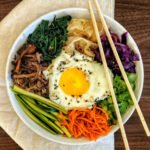
Halal Vegan Bibimbap
Ingredients
For the Rice Base:
- 2 cups of cooked white or brown rice
For the Toppings:
- 1 cup of julienned carrots
- 1 cup of zucchini, thinly sliced
- 1 cup of bean sprouts
- 1 cup of fresh spinach
- 1 cup of shiitake mushrooms, sliced
- 1 block of firm tofu, cut into cubes
- 2 tablespoons of soy sauce (halal-certified)
- 1 tablespoon of sesame oil (halal-certified)
- 1 clove of garlic, minced
For the Gochujang Sauce:
- 2 tablespoons of halal-certified gochujang
- 1 tablespoon of soy sauce
- 1 tablespoon of sesame oil
- 1 tablespoon of maple syrup or sugar
For Garnishing:
- Toasted sesame seeds
- Thinly sliced green onions
- Nori (seaweed) strips (optional)
Instructions
Cook the Rice:
- Prepare white or brown rice according to package instructions. Keep it warm.
Prepare the Vegetables:
- Sauté the carrots, zucchini, spinach, bean sprouts, and shiitake mushrooms separately in a skillet with a drizzle of sesame oil and a pinch of salt. Cook each until tender but still crisp, then set aside.
Cook the Tofu:
- In the same skillet, heat sesame oil and sauté tofu cubes with minced garlic and soy sauce until golden and slightly crispy.
Prepare the Gochujang Sauce:
- In a small bowl, mix halal-certified gochujang, soy sauce, sesame oil, and maple syrup until smooth. Adjust sweetness or spice level to taste.
Assemble the Bibimbap:
- In each serving bowl, add a generous layer of rice at the base. Arrange the sautéed vegetables, tofu, and any garnishes like green onions or sesame seeds on top in separate sections for a colorful presentation.
Serve and Mix:
- Drizzle the gochujang sauce over the toppings and serve immediately. Mix everything together before eating to enjoy the full flavor combination.
Notes
Why You’ll Love Halal Vegan Bibimbap
- Bursting with Flavor: The combination of fresh vegetables, savory tofu, and spicy-sweet gochujang sauce creates an explosion of flavors in every bite.
- Highly Customizable: Swap out vegetables or add your favorite plant-based proteins to suit your preferences.
- Nutritious and Filling: Packed with fiber, protein, and essential vitamins, this dish is a wholesome meal.
- Perfect for Meal Prep: Prepare the components in advance for a quick and easy lunch or dinner throughout the week.
- Culturally Rich: Experience the authentic flavors of Korea in a halal and vegan-friendly way.
Conclusion
Halal vegan bibimbap is a colorful, healthy, and satisfying dish that showcases the best of Korean cuisine. Its vibrant presentation and robust flavors make it a favorite for both plant-based eaters and anyone seeking a wholesome, delicious meal.
Gather your ingredients, whip up this easy recipe, and treat yourself to a halal vegan bibimbap that’s as beautiful as it is delicious. Enjoy the taste of Korea in every bite!




Leave a Reply